
Mahjong Etiquette: The Little Things That Make a Great Game
Good table manners make room for concentration, conversation and new players. These simple habits help everyone enjoy the game.
Mahj Mat Studio · September 12, 2026
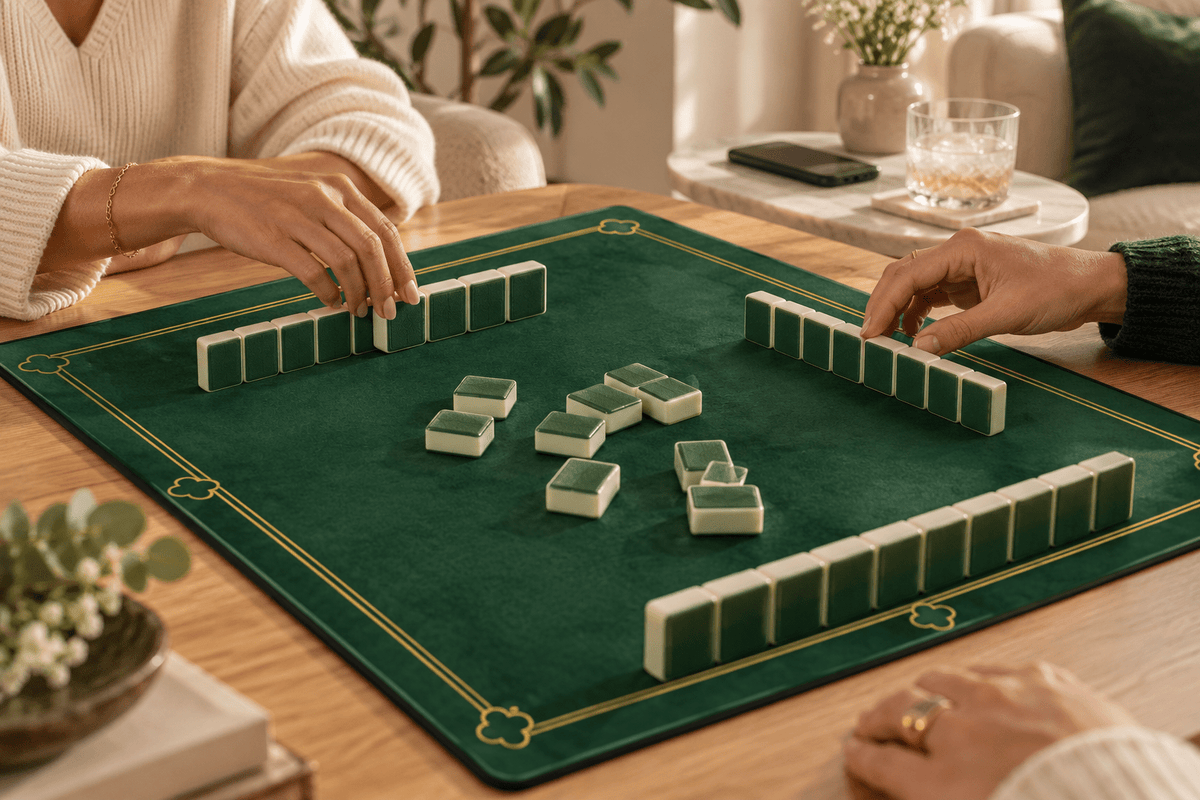
A good mahjong night has room for both concentration and conversation. You can care about your next move and still care about the people sharing the table.
Most of the habits that make an evening pleasant are small: arriving when you said you would, handling someone else’s equipment carefully and giving a new player time to think. They are easy to overlook until they are missing.
This is a guide to considerate social play, not an official rulebook. Procedures, penalties and calling rules depend on the version being played and the rules your group has agreed to follow.
Agree on the kind of evening you are having
Before the first hand, clarify whether this is a teaching session, a relaxed social game or a more focused evening. Newcomers should know how much explanation to expect, and experienced players should know whether the pace will be slower.
Confirm the rules reference and any house variations before play begins. If money is involved, agree on the stakes in advance rather than surprising someone after they have taken a seat.
Do not present a habit from your regular group as a universal rule. “At our usual table we do it this way” leaves room to learn how this table works.
Respect everyone’s time, including your own
Arrive at the agreed time, or let the host know promptly if you are delayed. If you need to leave early, mention it before the evening starts so the group can plan around it.
During play, pay attention even when it is not your turn. Take the time you need for a decision, but try not to make the other players repeatedly bring you back from a separate conversation or your phone.
As a host, avoid promising a beginner-friendly evening and then hurrying every new player. If the group’s pace is a mismatch, discuss a separate practice session kindly.
Treat the equipment as something someone cares about
Handle tiles and racks gently. Keep hands clean and dry, and place food and drinks where an accidental nudge will not send them into the game.
Ask before moving another player’s rack, turning over their tiles or demonstrating a move with their hand. Even a helpful gesture can reveal information or interrupt their thinking.
If something spills, pause and help. Let the owner decide how the equipment should be cleaned rather than reaching for an unfamiliar cleaning product.
Make phone etiquette practical
Silence avoidable notifications and keep scrolling for the break. If you need to remain available for a child, family member or work issue, a brief explanation is enough.
Ask for a pause when you need to take a call. Stepping away is easier for everyone than trying to play while half-listening to another conversation.
Ask before taking photographs, especially if you plan to share them. A game-night invitation is not automatically permission to post someone’s face or home online.
Offer help without taking over
During an agreed lesson, let one person lead the explanation. Several voices can turn a simple question into a confusing debate.
During ordinary play, avoid unsolicited advice about someone’s live hand. It can affect everyone at the table. Save strategy conversations for afterward, and ask, “Would you like to talk through that hand?” before giving a critique.
If you are watching rather than playing, avoid comments or reactions that could reveal information. Being an encouraging spectator does not require announcing what someone should do next.
Handle a rules question calmly
Pause when uncertainty arises and consult the group’s chosen reference. Keep the discussion about the situation, not about which player is more experienced.
In a formal event, use the organizer’s procedure for asking an official. At a social table, agree how you will resolve questions before they become personal.
Being friendly does not mean ignoring a rule whenever it feels awkward. It means applying the agreed rules consistently and explaining the outcome without embarrassment or accusation.
End as thoughtfully as you began
Enjoy a win without making someone else’s mistake the evening’s running joke. Help collect equipment, clear your glass and thank the host before leaving.
If something needs discussing, a private, specific conversation is usually more useful than a complaint in the group chat. “Could we agree on an end time next week?” gives people something they can act on.
The best etiquette makes it easier to return. If you are preparing to join your first table, start with what to expect at your first mahjong night. If you are bringing people together, see how to start a regular mahjong group.
More from the studio

Game night inspiration
A Friendsgiving Mahjong Night: Supper, Friends and One More Hand
Share the hosting, enjoy a manageable supper, and make room for mahjong. Plan a Friendsgiving gathering for four or eight with warm inspiration from The Earth House.
Read the story
Game night inspiration
Mahjong Accessories Guide: Racks, Dice Trays and Coasters
Understand what each accessory adds, check the fit and choose the pieces that work for your table. A practical guide to racks, pushers, dice trays and coasters.
Read the story
Game night inspiration
How to Host a Café-Style Mahjong Afternoon
Coffee, a few favorite pastries and room for the tiles. Plan a relaxed café-style mahjong afternoon with three looks from The Pâtisserie.
Read the story